
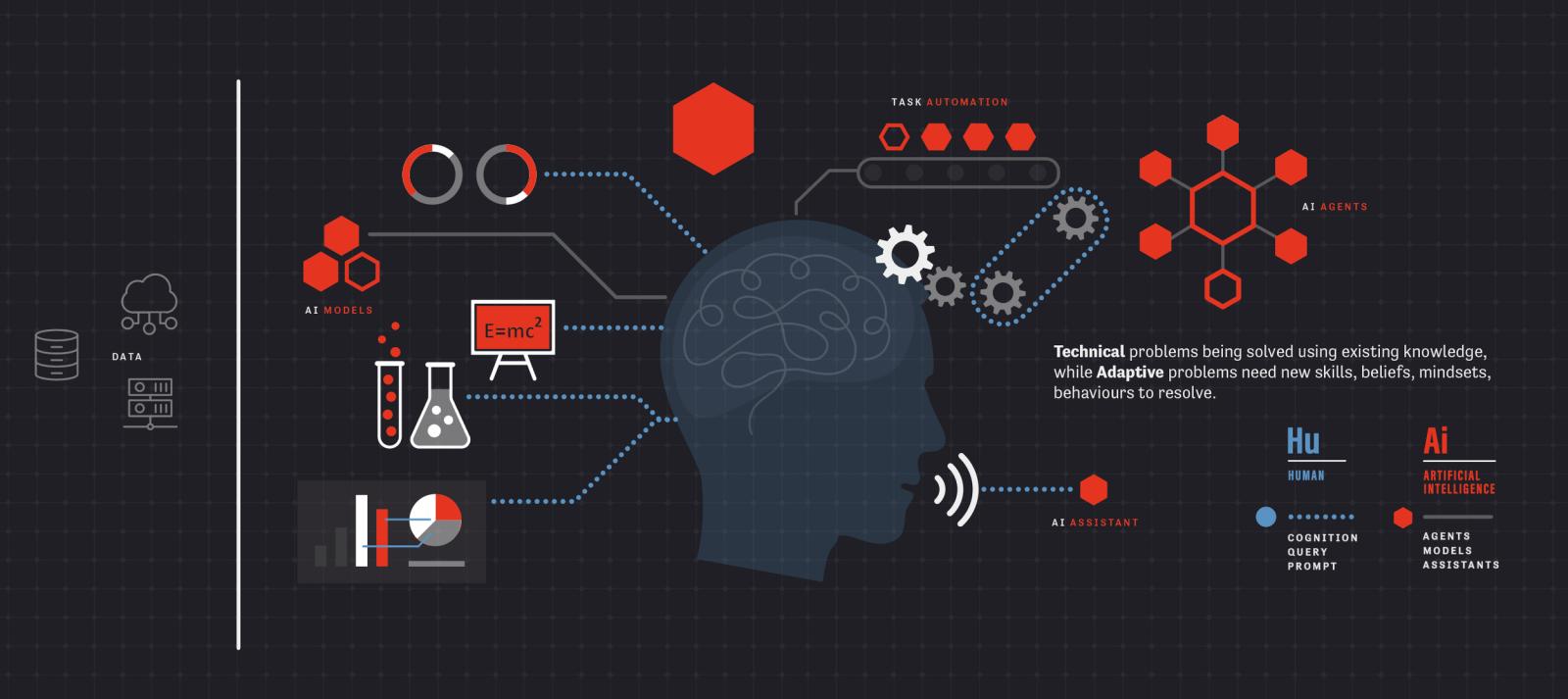
AI and Human Collaboration: Smarter, Safer Workforces
AI isn't here to replace humans, but to make workforces more efficient, safer, and more profitable. Multi-agent AI systems are leading this transformation across industries. However, as automation increasingly takes over decision-making roles, there's a risk of over-automation—where human operators become too reliant on AI, leading to skill degradation and loss of situational awareness. Human oversight is crucial.
The Importance of Keeping Humans "In the Loop"
Human operators must remain engaged and proactive, even in automated systems. Levels of automation refer to varying degrees of AI control. In critical industries like nuclear power or oil drilling, humans must always have the ability to intervene. AI systems should keep operators informed and involved, ensuring they maintain situational awareness.
ROI and Financial Impact: Measuring Success in AI Integration
Applying the Pareto Principle (80/20 rule): instead of automating everything, focus on the 20% of tasks where AI can deliver 80% of the value. Key high-impact areas include Logistics & Supply Chain (route planning, inventory, demand forecasting), Oil & Gas Exploration (seismic data analysis), and Utilities (predictive maintenance for power grids).
Industry-Specific AI Agent Roles
Oil & Gas: Exploration agents analyze geophysical data; Drilling Optimization agents monitor well conditions; Compliance agents track emissions; Predictive Maintenance agents monitor equipment. Logistics: Route Optimization agents analyze real-time data; Supply Chain agents manage inventory; Warehouse Automation agents optimize operations. Utilities: Demand Forecasting, Load Balancing, Predictive Maintenance, and Smart Metering agents.
Risks of Over-Automation: Maintaining Human Oversight
Over-reliance on automation can lead to skill degradation and complacency. In highly automated environments, operators may become passive monitors, losing the technical proficiency required to respond in emergencies. AI systems must keep humans 'in the loop,' ensuring they remain active participants. Maintaining situational awareness in highly automated environments is essential.
UX and Change Management: Designing AI for Humans
Successful AI implementation requires designing systems with human operators in mind. Human-centered design principles should guide AI interface development—systems must be intuitive, allowing operators to quickly access needed information. Effective change management using frameworks like Prosci's ADKAR model helps overcome employee resistance and ensures smooth AI adoption.
Artificial Immune Systems (AIS): Governance and Security at Scale
Inspired by the biological immune system, AIS are computational systems designed to detect and respond to anomalies, security breaches, and system malfunctions in real-time. In industries like oil and gas, nuclear power, and maritime logistics, AIS monitor AI agents continuously, identifying unusual patterns. AIS systems offer self-adaptation—they learn from previous incidents and adjust responses to new threats.
Risks of Not Adopting AI: Falling Behind the Curve
Organizations that avoid AI risk operational inefficiency (remaining stuck in outdated processes), regulatory non-compliance (struggling to keep up with requirements), and safety hazards (equipment breakdowns going undetected). In safety-critical industries, absence of predictive maintenance AI can lead to catastrophic failures.
Infinite Canvas and Apple's Vision Pro: The Future of AI-Driven Team Collaboration
Apple's Vision Pro provides spatial computing that allows organizations to manage fleets of AI agents in a 3D workspace. Benefits include: Visualizing the entire AI ecosystem in 3D, delegating tasks to AI agents via drag-and-drop, monitoring hybrid teams of humans and AI, and reduced cognitive load by immersing operators in a spatial environment where all information is easily navigable.
Conclusion: AI is a Partner, Not a Replacement
AI is not here to replace humans but to enhance human work. By integrating multi-agent AI systems into corporate structures—whether in maritime shipping, oil and gas, nuclear power, or utilities—companies can unlock new levels of efficiency, safety, and profitability. The future of work is hybrid: humans and AI working together to drive innovation, productivity, and success.

Jared Huke
Founder